How to Inspect Wood Trusses for Damage Over Time
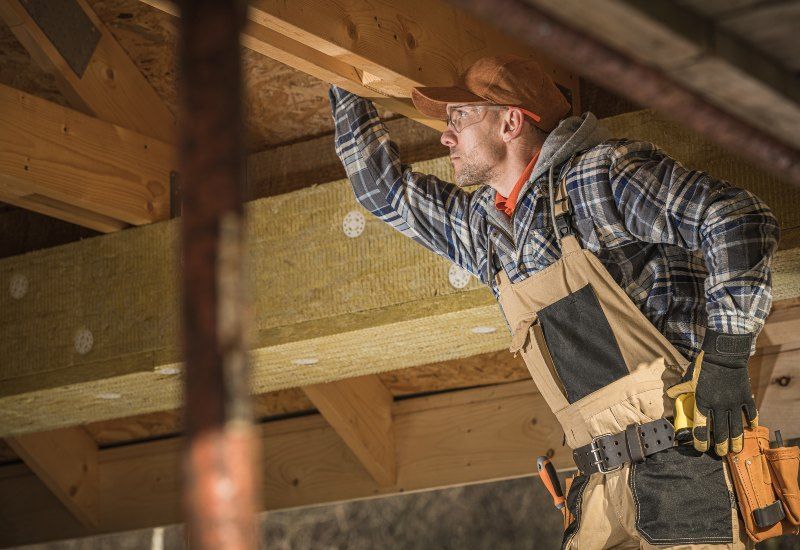
Maintaining the structural integrity of your property requires a proactive approach to the components that support it. Wood trusses are engineered with precision to distribute weight efficiently across a building’s frame. Environmental factors and the passage of time can compromise these systems. Regular wood truss inspection is essential for identifying minor issues before they escalate into costly repairs or hazardous structural failures. By understanding what to look for, property owners and facility managers can ensure long-term safety and durability. Wooden Roof Solutions offers a guide on how to inspect wood trusses for damage over time. Reach out today.
Understanding How Wood Trusses Behave Over Time
Wood is a natural, hygroscopic material, meaning it absorbs and releases moisture based on its environment. Over several years, trusses undergo natural cycles of expansion and contraction. While modern engineering accounts for some movement, excessive moisture fluctuations can lead to "season checking" or minor splitting. Furthermore, wood trusses are subject to creep, a slow, permanent deformation occurring under a constant load. Monitoring these gradual changes is a critical part of determining how to inspect wood trusses for damage over time.
Common Signs of Wood Truss Damage
Identifying signs of wood truss damage early requires a keen eye for detail. Look for the following issues:
- Localized darkening or staining on the timber, which often indicates water infiltration or fungal decay.
- Frass, a sawdust-like substance, or small exit holes, as these are primary indicators of wood-boring insect infestations.
- Any audible creaking or popping during mild weather conditions may also suggest that the truss members are struggling to manage their intended loads.
Identifying Structural Deformation in Trusses
Identifying structural deformation in trusses involves looking for deviations from the original geometric design. Using a plumb line or a laser level, check for "out-of-plumb" bowing or "lateral discharge," where the truss chords curve sideways. Significant sagging in the bottom chord, the horizontal beam visible from the attic or ceiling, is a clear red flag. Even a deflection of an inch can indicate that the internal stresses of the truss have exceeded their design limits, potentially leading to a roof collapse risk from truss damage.
Truss Joint and Connector Plate Inspection
The strength of a truss system is only as good as its connections. During a truss joint and connector plate inspection, focus on the galvanized steel gusset plates that hold the members together. Look for signs of corrosion, backing out, or teeth that have sheared off entirely. If there is a gap greater than 1/32 of an inch between the plate and the wood surface, the structural capacity of that joint is officially compromised and requires immediate reinforcement.
Step-by-Step Wood Truss Inspection Process
Our experts can help you inspect your wood truss. Follow these steps:
- Safety First – Ensure the area is well-lit and you have a stable ladder or catwalk. Wear protective gear, including a mask and eye protection.
- Visual Alignment – Stand at one end of the attic and sight along the peaks and bottom chords to check for straightness.
- Check the Plates – Inspect every junction where wood members meet, looking for loose or rusted metal plates.
- Moisture Assessment – Use a moisture meter to check for dampness in the wood, especially near roof penetrations like chimneys or vents.
- Document Findings – Take clear photographs and notes of any splits, cracks, or "notching" that appear to have been done after the original installation.
When to Call a Professional for Truss Damage Inspection
While a preliminary walkthrough is helpful, a formal truss damage inspection should be performed by a licensed structural engineer if you find significant anomalies. If you observe broken webbing, severe crushing at the bearing points, or if the building has recently survived a major weather event like a hurricane or heavy snow load, professional intervention is non-negotiable. Wooden Roof Solutions can provide a sealed repair specification that restores the truss to its original design strength.
Preventive Maintenance and Long-Term Safety
The best way to prevent truss failure is to control the attic environment. Ensure adequate ventilation to prevent heat and moisture buildup, which can accelerate wood rot and plate corrosion. Avoid using truss members for storage unless they were specifically designed for attic loads. Hanging heavy equipment or stacking boxes on the bottom chords can cause unintended deflection and structural fatigue.
Contact Wooden Roof Solutions
Wooden Roof Solutions provides comprehensive truss roof repairs and reinforcement services throughout the Midwest, including Oshkosh and Milwaukee, WI and Geneva, Glenview, La Grange, Evanston, and Arlington Heights, IL. Wood trusses are the silent backbone of your structure, but they are not invincible. Regular monitoring and timely repairs are the only ways to guarantee the safety of the occupants beneath them. If you have concerns about the stability of your roof system or have identified any of the warning signs mentioned above, do not delay. Contact our team of structural experts today for a professional wood truss evaluation.
Frequently Asked Questions
Can I Repair a Broken Wood Truss Myself?
No. Trusses are engineered components. Any repair, such as scabbing or sistering a joint, must be designed by a professional engineer to ensure the load-path remains intact.
How Often Should I Perform a Wood Truss Inspection?
We recommend conducting a visual inspection at least once a year, preferably in the fall before heavy snow loads or in the spring after peak storm seasons.
Does a Small Crack in the Wood Mean the Truss Is Failing?
Not necessarily. Small surface cracks are often cosmetic. Any crack that travels through the thickness of the wood or occurs near a connector plate should be evaluated by a professional.